
Public art has the power to shape how communities see themselves. For years, Amor por Juárez has brought large-scale murals to the region—projects that celebrate cultural identity, transform public space, and make art accessible to all. These are the murals created by Amor por Juárez.
Ánimo sin frontera by el mac
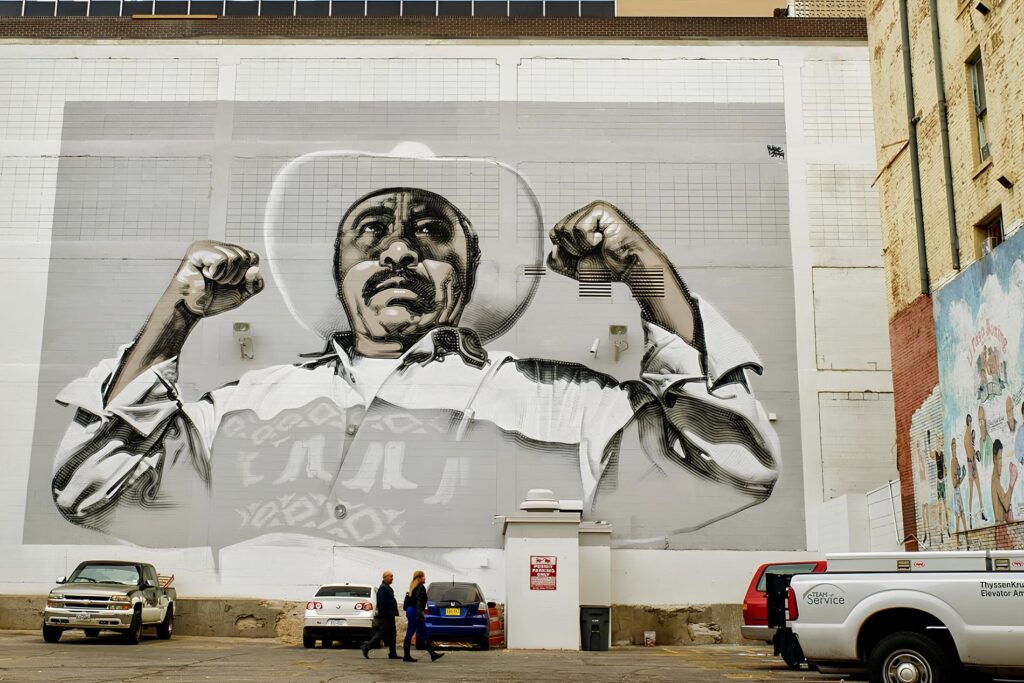
Created by the internationally renowned artist El Mac, Ánimo sin frontera is one of the most iconic murals in the region. Known for his meticulous linework and signature “ripple” technique, El Mac combines portraiture with a deep respect for cultural identity and working-class histories.
The mural depicts a figure embodying strength, dignity, and presence—rendered at a monumental scale that anchors the surrounding urban landscape. Through precision, pattern, and photographic realism, El Mac transforms the wall into a powerful tribute to the community and its heritage.

Mills Avenue
Mural by
Ricardo Chavarría
Ricardo Chavarría is known for his precise geometric language and his ability to build visual depth through repetition, symmetry, and color gradation. His work often explores perception and spatial tension, creating forms that appear to pulse or expand.
At 212 E. Mills Avenue, Chavarría brings this signature approach to a monumental scale. The mural’s concentric structure and shifting palette generate a sense of movement across the façade—an optical field that interacts with the architecture and the surrounding urban landscape.
The ElectriCity Sign
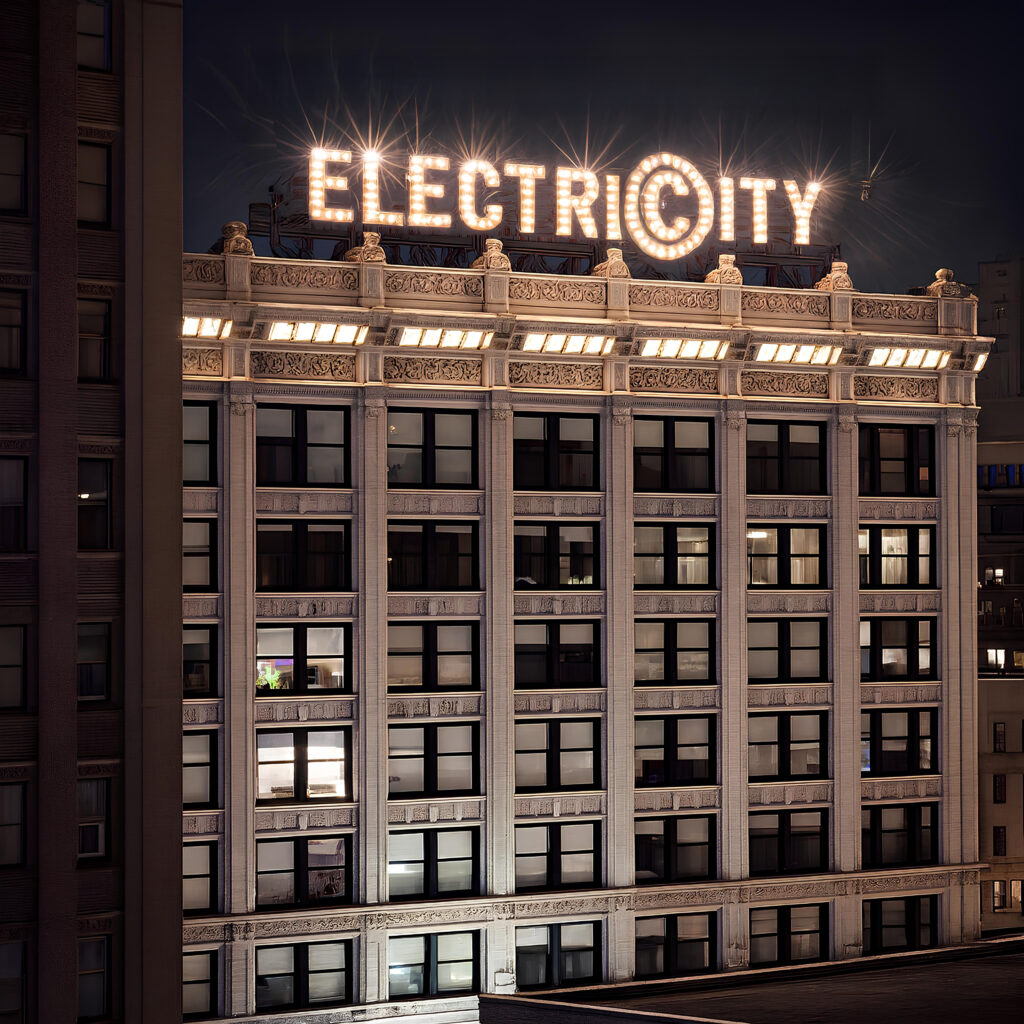
The Martin Building — a seven-story historic structure built in 1916–17 — underwent a comprehensive rehabilitation, transforming it into modern urban lofts and commercial space while preserving its architectural heritage. As part of this renewal, the “ElectriCity” marquee was installed atop the building, a six-foot-tall illuminated sign that reintroduces the building to the downtown skyline.
Lit with LED lights, the marquee serves as a beacon at night, reactivating the building’s presence in the urban landscape and symbolizing the broader revitalization of downtown. The “ElectriCity” sign and the modernization of the building together signal a reimagining of public space: preserving historic fabric while adapting to new forms of urban life.
This installation illustrates how contemporary interventions can honor history while contributing to the social and visual regeneration of the region.